 English
 Indonesia

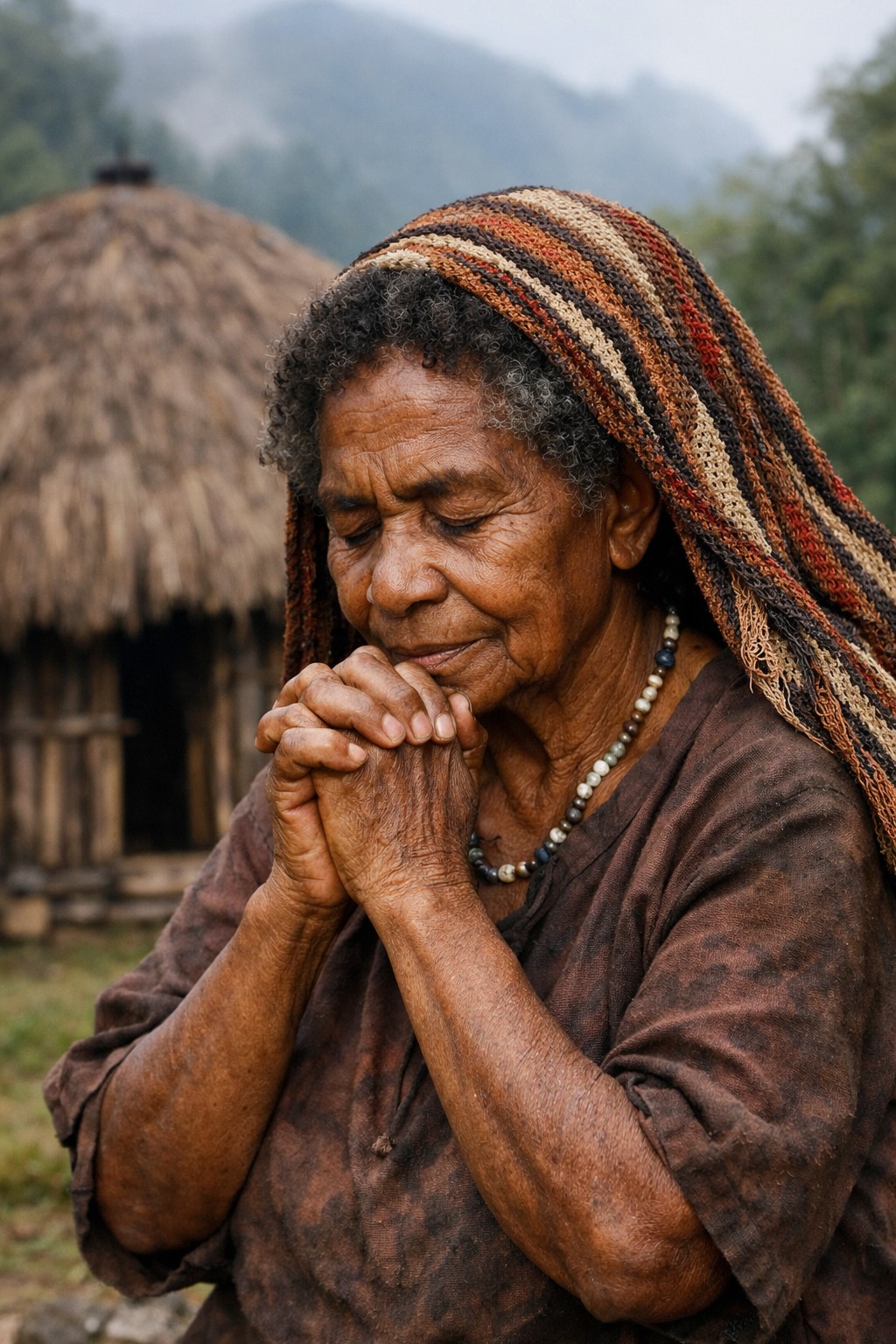
Papuan women are often known as strong and resilient individuals. They work in the gardens, care for their families, nurture their faith, and ensure that life continues. Yet behind this strength, many women carry inner exhaustion and wounds that are rarely expressed. Not every tear is heard, and not every struggle finds space to be shared. This situation is closely related to the social reality of Papua, where women frequently bear double burdens within families and customary communities (Giay 2014; Widjojo 2009). For this reason, the story of Sarah in Genesis 18:1–15 resonates deeply with the experiences of Papuan women today.
Sarah was not in the front space with Abraham. She was behind the tent. That space was a quiet space, a domestic space, a space often considered unimportant within patriarchal social structures. Yet it was precisely from that space that God spoke. God knew Sarah’s unheard laughter and her hidden feelings. This affirms that God is not present only in places of worship and public spaces, but also in the deepest inner spaces of women’s lives. Scripture testifies that the Lord knows human thoughts and the contents of the heart even before words are spoken (Psalm 139:1–2).
For many Papuan women, the space behind the tent may take the form of the kitchen, the garden, the market, the honai, or the inner room of the heart where wounds are tightly kept. In daily life, women often bear their burdens privately and silently. Various reports indicate that violence against women continues to occur, both within households and in social spaces, and is not always addressed justly (Komnas Perempuan 2023; ELSAM 2018). In some situations, women are even asked to remain silent for the sake of preserving family or community harmony, often in the name of custom and communal values (AMAN 2022).
Sarah laughed within her heart. This laughter was not mocking laughter, but laughter born of a long wait and hopes that had been continually delayed. She had waited so long that the promise felt impossible. This experience closely mirrors the reality of many Papuan women who wait for justice, recognition, and healing, yet often feel alone within social systems that have not fully stood on their side (Widjojo 2009). Women’s resilience is frequently praised, but their inner wounds are not always cared for collectively.
When Sarah denied her laughter, she was afraid. Yet God did not humiliate her. God knew Sarah’s heart and remained faithful to His promise. Here we see that God does not normalize wounds and does not regard suffering as something ordinary. God addresses Sarah with truth that heals. Feminist theology reminds us that women’s lived experiences, including their suffering, are places where God reveals His presence and will (Giay 2006). The Bible also honestly names Sarah’s bodily condition. Her age and limitations are not concealed. The female body is not shamed, but honored as part of God’s plan, in line with the Christian understanding of human dignity (KWI 2019).
In the Papuan context, social reflections show that customary traditions hold noble values in safeguarding communal life and solidarity. Yet these traditions must also continue to be critiqued and renewed so that they truly protect women. When women are continually asked to endure and remain silent while their wounds are not healed, the community gradually loses its role as a guardian of life. The church and customary communities are called not to blame one another, but to learn together how to protect, listen, and restore (Giay 2006; Widjojo 2009; AMAN 2022).
The God who knows women’s hearts is also the God who heals the inner life. Sarah’s restoration began when she was recognized and addressed. God saw and knew her feelings. For Papuan women, inner healing is often hindered not by a lack of faith, but by the absence of safe spaces to speak honestly about experiences of violence, injustice, and suffering (Komnas Perempuan 2023; ELSAM 2018). This is where the church is called to be present—as a listening space, a companioning space, and a healing space.
The church in Papua bears a great responsibility. It is called not only to praise women’s strength, but also to protect their vulnerability. Papuan women are guardians of family life, land, and faith. To protect women is to protect the future of the community itself and to honor human dignity as God’s creation (Widjojo 2009; KWI 2019).
The God who knew Sarah’s heart is the same God who knows the hearts of Papuan women today. He sees bitter laughter, hears silent prayers, and understands hidden wounds. May the church and the community continue to learn to walk with women—not only with words, but also through concrete protection and restoration.
Pastoral Invitation
This reflection invites the church to open safe spaces for women to share their stories without fear of judgment. Customary communities are called to return to their foundational values as guardians of life and protectors of the vulnerable, rather than spaces of silencing. Families are invited to learn to listen with empathy and to break the habit of suppressing wounds. Through simple yet faithful steps, the church can become an instrument of God in healing the inner lives of Papuan women and affirming their dignity as beloved creations of God. (Paul Kapisa)
References :
- Komnas Perempuan (2023). Catatan Tahunan Kekerasan terhadap Perempuan. Jakarta.
- Giay, Benny (2006). Menuju Papua Baru. Jayapura. - Giay, Benny (2014). Papua di Mata Orang Asli. Jayapura.
- Widjojo, Muridan S., ed. (2009). Papua Road Map. Jakarta: LIPI dan Yayasan Obor Indonesia.
- AMAN Aliansi Masyarakat Adat Nusantara (2022). Perempuan Adat Papua dan Tantangan Keadilan Sosial. Jakarta.
- ELSAM Lembaga Studi dan Advokasi Masyarakat (2018). Hak Asasi Manusia di Indonesia. Jakarta.
- Konferensi Waligereja Indonesia KWI (2019). Martabat Manusia dalam Terang Iman dan HAM. Jakarta.

Add New Comment